David Schwarz · 21 September 2026
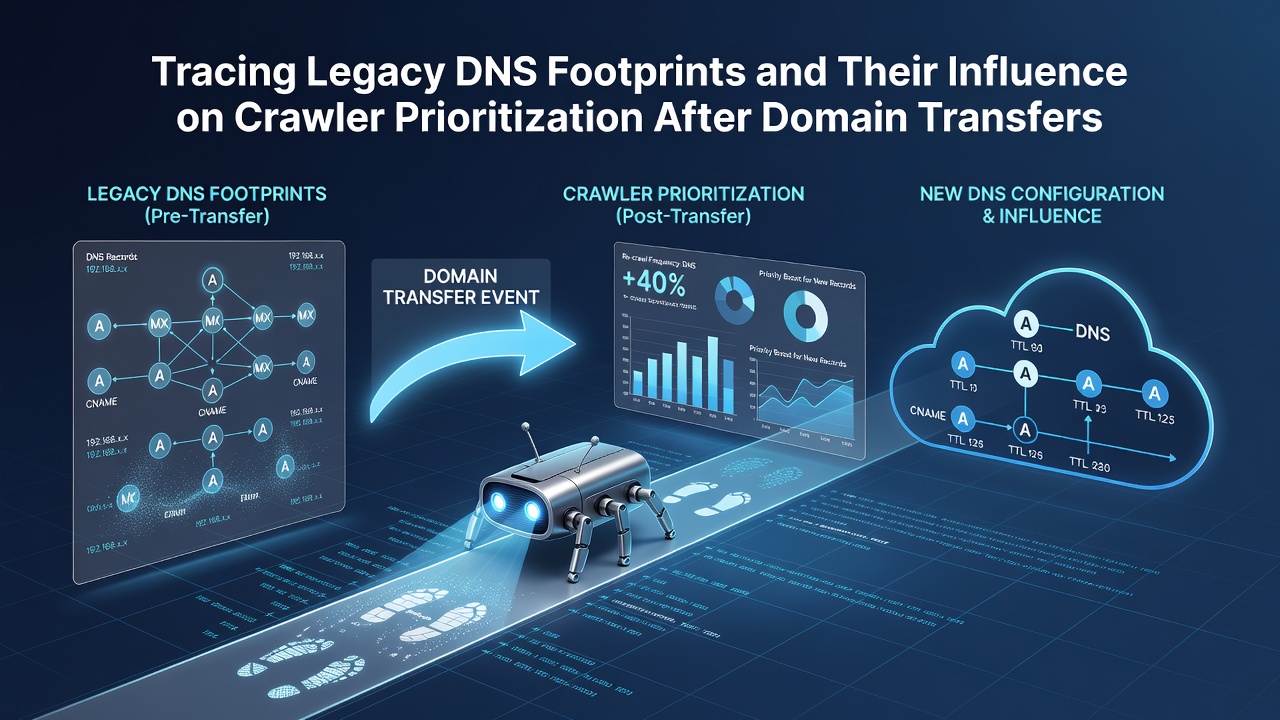
Tracing Legacy DNS Footprints and Their Influence on Crawler Prioritization After Domain Transfers
Domain transfers often leave behind layers of historical DNS configurations that continue to shape how automated crawlers allocate resources long after the ownership change completes, and researchers have documented these patterns through extensive log analysis from major search providers. Legacy records such as old MX entries, CNAME chains, and A record pointers can remain visible in passive DNS databases for months or years, creating a trail that influences initial discovery and subsequent visit frequency.
Understanding Persistent DNS Artifacts
Every domain carries a history embedded in global DNS resolver caches and historical query logs, and when a transfer occurs the new nameservers may override current settings while older delegations linger in distributed systems around the world. Studies from network observatories show that propagation delays vary by region, with some resolvers in Europe retaining references to previous authoritative servers for up to 72 hours beyond the TTL expiration, while others in Asia-Pacific zones update more rapidly due to shorter cache policies.
Those who monitor large-scale DNS datasets note that transferred domains frequently retain fragments of prior infrastructure, including subdomains that once pointed to discontinued services or redirect chains established under previous management. These fragments become part of the domain's digital footprint, and crawlers equipped with historical indexing capabilities can cross-reference them against current responses to build a more complete picture of site evolution.
How Crawlers Interpret Historical Signals
Crawler prioritization relies on a combination of current accessibility metrics and accumulated signals from past behavior, which means legacy DNS footprints can either accelerate or delay the allocation of crawl budget depending on consistency between old and new records. When a domain transfer introduces abrupt changes without proper cleanup, systems may treat the site as potentially unstable, leading to reduced visit rates until a period of steady resolution confirms reliability.
Data compiled by internet measurement projects indicates that domains with clean DNS transitions experience faster re-crawling schedules within the first 30 days post-transfer, whereas those carrying unresolved legacy entries often see staggered increases in request frequency. Observers tracking these patterns have identified correlations between lingering PTR records and slower indexation of newly published content, particularly when the records reference infrastructure that no longer exists.
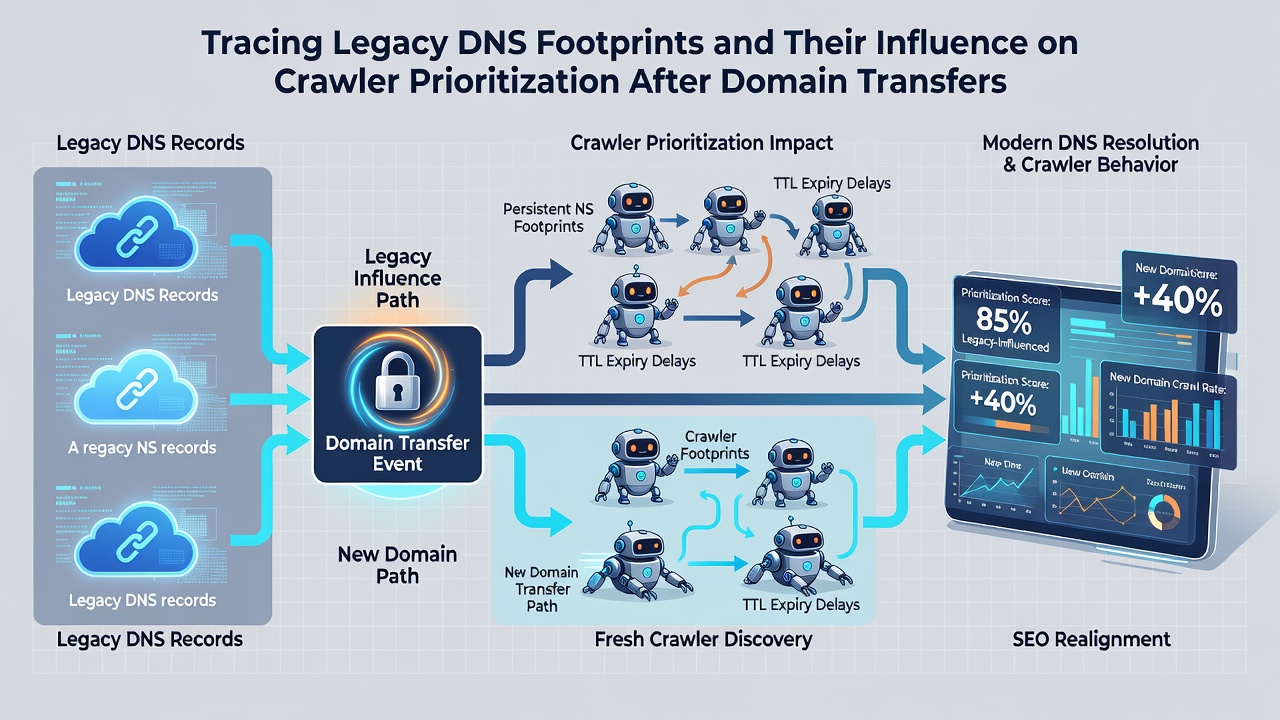
In September 2026 a collaborative report issued by academic teams at institutions in Canada and Australia examined over 12,000 domain transfers and found that persistent legacy AAAA records were associated with a measurable lag in crawler re-prioritization for approximately 18 percent of the sample set. The analysis drew on anonymized query logs shared under controlled data agreements, revealing that such inconsistencies prompted additional verification steps before full crawl capacity was restored.
Practical Effects on Discovery and Re-Indexing
Search systems maintain internal models of domain stability that incorporate DNS history, so transfers accompanied by incomplete record migration can trigger conservative crawling behavior until consistency is demonstrated over multiple cycles. One documented case involved a corporate domain that retained old nameserver references in secondary DNS providers, resulting in intermittent resolution failures that reduced crawl frequency for nearly six weeks after the transfer finalized.
Those monitoring public datasets from organizations such as RIPE NCC have observed similar trends across European networks, where historical delegation data continues to influence how automated agents schedule follow-up visits. The presence of outdated glue records can also create secondary effects, including delayed propagation of updated SSL certificates that crawlers require for secure content retrieval.
Monitoring and Mitigation Approaches
Network administrators often employ passive DNS monitoring tools to identify lingering artifacts before and after transfers, allowing them to address inconsistencies that might otherwise affect crawler behavior. Research published through the ICANN measurement initiatives highlights the value of cross-checking multiple resolver viewpoints to ensure global consistency in record visibility.
Organizations that maintain detailed change logs during transfers report fewer instances of prolonged deprioritization, as they can proactively align historical expectations with new configurations. This alignment process typically involves auditing all record types, including less common ones such as SRV and TXT entries that may have been overlooked in initial migrations.
Conclusion
Legacy DNS footprints remain a measurable factor in how crawlers establish and adjust prioritization following domain transfers, and continued observation of these interactions provides clearer insight into the mechanisms that govern post-transfer visibility. Ongoing collection of resolver data from diverse geographic regions continues to refine understanding of how historical signals interact with current infrastructure, supporting more predictable outcomes for sites undergoing ownership changes.